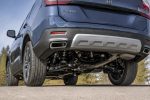
Certain 2026 Honda Pilot and 2026 Honda Passport SUVs could have a manufacturing issue that could affect the rear suspension. The defect involves improperly tightened rear subframe bolts, which could compromise vehicle stability and increase the risk of a crash.  The recall affects approximately 3,933 vehicles in the United States.

What Is the Problem?

According to Honda, the rear subframe bolts may not have been tightened to the correct specification during vehicle assembly.  The rear subframe is a critical structural component that supports parts of the suspension system and helps maintain proper handling and stability. If the bolts loosen over time due to normal driving loads or an impact, the subframe can begin to move out of position.  In severe cases, the rear subframe could partially or completely detach from the vehicle, significantly increasing the risk of a collision.

What Caused the Issue?

Honda traced the problem to changes made on the production line.

A new rear subframe pallet was introduced during manufacturing, but the torque settings used to tighten the subframe bolts were not properly evaluated before production began. The investigation also found several additional factors that reduced the effectiveness of the tightening process, including:

  • Incorrect torque specifications applied during assembly
  • Inadequate grease application on the tightening equipment
  • Improper gearbox adjustments
  • An incorrectly adjusted subframe pallet clamp

Together, these issues resulted in some vehicles leaving the factory with rear subframe bolts that were not tightened sufficiently.

Warning Signs Owners May Notice

Owners of affected vehicles may experience:

  • Abnormal noises coming from the rear of the vehicle.
  • Reduced vehicle stability while driving.

If either symptom develops, owners should have the vehicle inspected as soon as possible.

How Honda Discovered the Problem

Unlike many recalls that begin with customer complaints, this issue was identified during Honda’s own quality control process.

The timeline of the investigation includes:

  • May 15, 2026: Honda identified insufficiently torqued rear subframe bolts during a production line sampling inspection.
  • May 20, 2026: All vehicles remaining in inventory were inspected.
  • June 8, 2026: Honda completed an investigation to identify the affected vehicle population.
  • June 25, 2026: Honda determined a safety defect existed and initiated a voluntary recall.

As of June 25, 2026, Honda reported no warranty claims, crashes, injuries, or fatalities related to this issue in the United States.

Recall Remedy

Honda dealers will:

  • Inspect the rear subframe bolts
  • Replace the bolts if necessary

Owner notification letters are expected to be mailed beginning August 24, 2026.

Recall Information

  • Manufacturer: Honda (American Honda Motor Co.)
  • Affected Vehicles: Certain 2026 Honda Pilot and 2026 Honda Passport models
  • Recall Number: OOY
  • NHTSA Campaign Number: 26V-424

What Owners Should Do

If you own a 2026 Honda Pilot or Passport, watch for a recall notification from Honda.  Although Honda has not received any reports of crashes or injuries related to this issue, prompt inspection and repair will help ensure the rear suspension remains securely attached and your vehicle continues to operate safely.
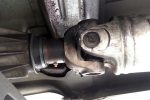
Mercedes-Benz has determined that there is a safety defect affecting over 24,000 Mercedes-Benz vehicles.  The problem is related to an issue with the drive shaft universal joint. This part plays a critical role in how power is delivered to your wheels, and when it fails, the consequences can be serious.

What Vehicles Are Affected?

This recall (NHTSA Campaign Number: 26V-216) applies to select 2018–2020 Mercedes-Benz 4MATIC models, including:

  • E-Class (Sedan, Wagon, Coupe, Cabriolet)
  • S-Class (Sedan, Coupe, Convertible)
  • Maybach S 560 4MATIC

Specifically, models like the E 400, E 450, S 450, S 560, and Maybach S 560 are included.

What’s the Problem?

Mercedes-Benz has identified that increased wear may occur in the universal joint (U-joint) on the drive shaft. This is due to insufficient production parameters from a supplier, which can lead to premature degradation over time.

The real issue begins when:

  • The U-joint loses lubrication.
  • Wear accelerates.
  • The joint can fracture under load.

At that point, the connection between the transfer case and front axle transmission may fail entirely.

Why This Matters (Safety Risk)

If the universal joint fails, the vehicle can experience a sudden loss of propulsion—meaning it may stop delivering power to the wheels without warning.

That creates a dangerous situation:

  • Loss of acceleration in traffic.
  • Reduced ability to maneuver.
  • Increased risk of a crash.

Mercedes-Benz notes that while some warning signs may appear, they are not guaranteed to be noticed before failure.

Warning Signs to Watch For

In some cases, drivers may notice early symptoms such as:

  • Unusual noises from underneath the vehicle.
  • Vibrations while driving, especially under acceleration.

However, these signs can be subtle—or completely absent—making this issue particularly concerning.

What Caused the Issue?

The root cause traces back to a supplier manufacturing process that did not meet optimal parameters. Over time, this can result in:

  • Improper wear patterns.
  • Reduced durability of the U-joint.
  • Increased likelihood of failure under normal driving conditions.

What Mercedes-Benz Will Do

Mercedes-Benz dealers will:

  • Inspect the drive shaft.
  • Replace it if necessary.
  • Perform all repairs free of charge.

This recall highlights how even a single component failure within the drivetrain can have major safety implications. If your vehicle is affected, it is worth addressing promptly—even if you have not noticed any symptoms.  A quiet drivetrain today does not guarantee it will stay that way tomorrow.  Owner notification letters are scheduled to be mailed beginning June 2, 2026.

Chrysler will be contacting the owners of certain 2014-2017 Chrysler 300s and 2014-2017 Dodge Chargers regarding a problem affecting their vehicles power train system. According to the defect report, some vehicles equipped with all wheel drive (AWD) may experience loosening of the front prop-shaft bolts. The prop-shaft could completely disconnect while driving, causing damage to the power train and under body components. Drivers may notice excessive noise and vibration in the vehicle prior to a failure.

Owners will be asked to return to their nearest dealership to have all eight front driveshaft bolts replaced. Fore more information about the problem, owners may contact Chrysler customer service at 1-800-853-1403. Chrysler’s number for this recall is T03 and the NHTSA campaign number is 17V-097.