Hyundai Santa Fe Bank Display Screen

If you own a model year 2024 or 2025 Hyundai Santa Fe or Santa Fe Hybrid, you need to be aware of a significant safety recall affecting your vehicle’s backup camera system.

Hyundai Motor America has determined that a defect exists in certain vehicles where the rear view camera image may fail to display when the vehicle is placed in reverse. This issue has triggered a noncompliance recall because the affected vehicles fail to meet the requirements of Federal Motor Vehicle Safety Standard (FMVSS) number 111 regarding “Rear Visibility.”

Here is everything owners need to know about why the cameras are failing, the safety risks involved, and how Hyundai plans to fix the problem.

What is Causing the Santa Fe Camera Failure?

It is frustrating when a new car feature stops working. In this case, the problem isn’t necessarily a defective camera lens, but rather how the camera system was installed at the factory.

According to investigations by Hyundai’s Safety Test and Investigation Laboratory (STIL), the root cause stems from improper installation of the rear view camera wiring harness.

During the manufacturing process, variations in how the “end-of-line” wire harnesses were packaged allowed for inconsistencies in cable routing. In some vehicles, the camera wiring harnesses were installed with a “twist.” This twisting creates increased tension on the wires.

Over time, this tension can cause physical damage to the wiring, including solder cracks near terminal connections and damage to the wire’s shield line. Once these wires are compromised, the connection becomes unstable, leading to a flickering image or a completely blank screen on your dashboard display.

Why This Is a Safety Issue

A functional rear view camera is vital for safe reversing. It helps drivers spot pedestrians, obstacles, and other vehicles in their blind spots.

When the camera fails to display an image, the driver loses this critical view. This noncompliance with FMVSS No. 111 increases the risk of a crash or backup collision.

The Investigation Timeline

Hyundai began looking into this issue between March and June 2025 after routine monitoring of warranty claims showed a spike in inoperative cameras. They analyzed 21 different camera assemblies, discovering the solder cracks and wiring damage. Following extensive review with the supplier and Hyundai’s North America Safety Decision Authority in November 2025, the decision was made to issue a recall.

The Fix: What Hyundai Will Do

  1. Replace the rear view camera assembly entirely.
  2. Reposition the wiring harness correctly to ensure there is no tension causing damage to the new unit.

Important Dates and Next Steps for Owners

If you own a 2024-2025 Santa Fe or Santa Fe Hybrid, keep an eye on your mail.

  • Owner Notification: Hyundai expects to mail notification letters to affected owners beginning January 19, 2026.

If your camera is currently not working, you do not need to wait for the letter to contact your dealer.

Essential Recall Reference Numbers

When speaking with your dealer or searching the NHTSA database, use these reference numbers to identify this specific issue:

  • Hyundai Recall Number: 288
  • NHTSA Campaign Number: 25V-808

Ford Motor Company has issued a recall for certain 2025 Ford Ranger trucks due to a potential problem with the passenger airbag system. According to the automaker, a manufacturing error could prevent the airbag from deploying properly in the event of a collision, creating an increased risk of injury for passengers.

While the issue affects only a limited number of vehicles, Ford is taking immediate action to ensure compliance with federal safety standards and to protect customer safety.

The Issue: Faulty Instrument Panel Scoring

The concern originates from the instrument panel (IP) assembly—specifically the laser scoring process used on the underside of the IP topper. The scoring defines the precise way the airbag deploys through the dashboard surface.

Ford discovered that the supplier, Yanfeng (YF), had unintentionally altered the laser scoring parameters during production. This seemingly small change resulted in a deviation from the approved design, affecting the scoring pattern in certain 2025 Ford Ranger vehicles.

This flaw may cause the passenger airbag to deploy more slowly or not fully deploy at all, especially during cold-temperature conditions or low-output deployments. During internal safety testing, Ford observed that in some cases, the airbag cushion failed to completely exit the panel surface, creating a potential hazard and violating Federal Motor Vehicle Safety Standards (FMVSS) 208, which govern occupant crash protection performance.

Timeline of Events

The airbag concern was identified and escalated through Ford’s quality and safety review process over the course of several weeks:

  • September 10, 2025: Supplier Yanfeng notifies Ford of an unintended change to the laser scoring process.
  • September 18, 2025: Ford’s Critical Concern Review Group (CCRG) launches a detailed investigation into the issue.
  • September 9, 2025: The supplier revises the laser scoring process to match the original specifications and validates the fix.
  • October 3, 2025: Ford’s Field Review Committee reviews the findings, confirms non-compliance with FMVSS 208, and authorizes a field action.

Although Ford is not aware of any crashes, injuries, or customer complaints linked to the problem, the company has decided to act out of caution and replace affected components.

What Ford Owners Need to Know

Owners of affected 2025 Ford Ranger trucks will be contacted directly by Ford. Here’s what you should know about the recall:

  • Recall Number: 25C54
  • NHTSA Campaign ID: 25V-678
  • Remedy: Ford dealers will replace the instrument panel assembly.
  • Notification Schedule:
    • Interim owner letters were mailed on October 24, 2025, to inform customers of the issue.
    • Final remedy letters will be mailed once replacement parts are available and the repair process begins.
steering Ford SD

If you drive a 2020 or 2021 Ford Super Duty F-250, F-350, or F-450, there’s a new recall you should know about. Ford has confirmed a steering defect that could cause you to suddenly lose control of your truck while driving.

And here’s the bigger issue: these trucks already have a long history of recalls. If your Super Duty keeps going back to the dealership for repairs, it may be more than just bad luck — your truck could be a lemon.

What’s the Problem?

The recall centers on the steering column upper shaft. In certain trucks, the part doesn’t meet Ford’s own strength requirements. That means it can actually separate while driving, causing you to lose the ability to steer.

  • Safety Risk: Loss of steering control makes a crash much more likely.
  • No Warning Signs: There are no dashboard messages or alerts — the failure can happen without warning.
  • Affected Trucks: Ford believes the defect affects trucks built at the Kentucky Truck Plant before October 1, 2020.

How Ford is Handling the Recall

Ford has issued recall number 25S94 (NHTSA 25V-626). Here’s what they’re telling owners:

  • Notices in the Mail: Letters started going out in October 2025 to warn owners.
  • Dealer Inspections: Dealers will check your steering column.
    • If it fails inspection → the part will be replaced.
    • If it passes → it will be modified to improve durability.
  • Final Fix: A long-term repair solution is expected by December 2025.

Ford Super Duty: Too Many Recalls?

Unfortunately, this isn’t the first time Super Duty owners have faced recalls. The 2020–2021 lineup has been hit with recalls for:

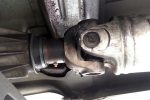
  • Driveshaft separations
  • Brake system problems
  • Electrical issues

When you add the steering shaft defect to the list, it paints a troubling picture. For owners, these repeated issues can mean frustration, downtime, and serious safety worries.

Could Your Truck Be a Lemon?

Here’s the bottom line: If you’ve had to bring your F-250, F-350, or F-450 back to the dealer again and again for serious repairs, you may not just have a bad truck — you may have a lemon.

  • Lemon Law Basics: If a defect affects your truck’s safety, value, or reliability, and the manufacturer can’t fix it after a reasonable number of tries, you may qualify for a buyback, replacement, or cash settlement.
  • Why Steering Defects Matter: Because steering is critical to safe driving, repeated failures or incomplete fixes could make your case even stronger.

What Should You Do Now?

  1. Keep Records: Save every repair order, recall notice, and warranty claim. Documentation is key if you ever need to pursue a claim.
  2. Pay Attention to Repeat Repairs: If you’ve had the same issue fixed more than once, or your truck keeps going back to the dealer, you may have lemon law rights.
  3. Get Help if Needed: Don’t wait until you’re out of patience (or warranty). Talk to a lemon law professional if you suspect your Super Duty qualifies.

FAQ: Ford Super Duty Steering Recall & Lemon Law

Q: Is it safe to drive my truck before the repair?
A: Because there are no warning signs before the steering defect happens, it’s risky to keep driving an affected truck. Schedule a dealer inspection as soon as possible.

Q: What if the dealer already repaired my steering issue once, but the problem came back?
A: If the same issue keeps happening after repairs, that’s a red flag. Repeated failures may qualify your truck as a lemon under state or federal law.

Q: How many repairs does it take before my Ford is considered a lemon?
A: It depends on your state. In many states, two or more failed repair attempts for a serious safety issue (like steering) may be enough. In others, it may take three or four attempts.

Q: Can I get a buyback or replacement if my truck is a lemon?
A: Yes. Lemon laws can entitle you to a buyback of your vehicle or a replacement truck, if the manufacturer can’t fix the defect after a reasonable number of tries.

Q: Do I need a lawyer to file a lemon law claim?
A: While not required, most lemon law cases are easier with legal help. Many lemon law attorneys work on a no-cost-to-you basis, since the law requires the manufacturer to pay legal fees if you win.


Final Thoughts

The 2020–2021 Ford Super Duty trucks are built to tackle tough jobs, but repeated recalls and a dangerous steering defect have many owners concerned. If your F-250, F-350, or F-450 is spending more time in the shop than on the road, don’t ignore it.  Your truck may qualify as a lemon, and knowing your rights could help you get the compensation or replacement you deserve.


General Motors (GM) has announced a serious safety defect that may affect certain 2023–2026 Chevrolet Corvette vehicles. The issue is linked to models equipped with a left-side radiator and fan combination, which are found in Corvette Z06 and ZR1 models.

According to GM, excess fuel spilled into the fuel-filler pocket during refueling could leak onto hot radiator surfaces and potentially ignite. This dangerous condition raises the risk of a vehicle fire, even while the car is turned off.

What Is the Chevrolet Corvette Fire Risk Defect?

In the affected vehicles, the fuel-filler pipe and recessed pocket sit directly above the left-side radiator and cooling fan. If a refueling spill occurs—especially if a gas pump fails to shut off properly—the spilled fuel may leak onto the radiator.

When the fan is running, it can draw spilled fuel through the radiator, vaporize it into the engine compartment, and expose it to ignition sources. If ignited, this can result in a sudden vehicle fire.

GM’s investigation confirmed that at least four Corvette fire incidents were connected to this defect, two of which involved malfunctioning gas station pumps that failed to shut off properly.

Timeline of GM’s Safety Investigation

  • June 10, 2025 – GM received a report through its “Speak Up for Safety” system after a social media post claimed three Corvettes caught fire during fueling within 30 days.
  • June 12, 2025 – A GM-owned Corvette test vehicle caught fire while refueling.
  • June 17, 2025 – GM officially opened a product investigation.
  • June 20, 2025 – Engineers identified distinct burn patterns on the left-side radiator of the test vehicle.
  • July–August 2025 – Controlled fuel-spill simulations showed that fuel leaks in vehicles with a left-side radiator could ignite under specific conditions, replicating the burn damage seen in real-world fires. Vehicles without this radiator design did not ignite.
  • August 14, 2025 – GM’s Safety Field Action Decision Authority (SFADA) decided to launch a safety recall.

Models Affected by the Safety Recall

While the issue involves Corvettes from model years 2023 through 2026, GM confirmed the left-side radiator/fan combination is only used in:

  • Chevrolet Corvette Z06 (2023–2026)
  • Chevrolet Corvette ZR1 (2023–2026)

All confirmed fire incidents involved Corvettes equipped with this radiator design.

Risks to Drivers and Passengers

If fuel leaks during refueling and reaches an ignition source, the risks include:

  • Vehicle fire while stationary
  • Potential injuries or fatalities (two incidents reported minor injuries)
  • Damage to property and fueling stations

GM’s Recommended Precautions for Corvette Owners

Until repairs are completed, Corvette owners should take the following precautions:

  • Always ensure the fuel nozzle is fully inserted into the filler pipe.
  • Do not overfill the gas tank; stop after the pump clicks off once.
  • Always turn off the engine before refueling.
  • Be cautious at gas stations with malfunctioning or leaking pumps.

The Official Fix

GM has announced that dealers will:

  • Install a protective shield to divert spilled fuel away from hot components.
  • Begin mailing owner notification letters on October 6, 2025.
  • Send a second letter once permanent parts and remedies are available.

The National Highway Traffic Safety Administration (NHTSA) has assigned this defect campaign number 25V-536.

Can Lemon Law Help Corvette Owners?

If your 2023–2026 Chevrolet Corvette has experienced repeated problems, you may have rights under the California Lemon Law and other state lemon laws.

The law may entitle you to:

  • A repurchase (buyback) of your Corvette
  • A replacement vehicle
  • Or cash compensation if your car qualifies as a lemon

Since the defect involves a serious safety risk, owners should act quickly. Consulting with an experienced Lemon Law attorney can help determine if your Corvette qualifies for relief. If repeated safety issues, downtime, or repair delays affect your Corvette, you may qualify for protection under Lemon Law.

If you’ve recently purchased a Tesla Cybertruck, you’re probably enjoying the attention it brings — but there’s something new owners need to be aware of. Tesla has issued a recall affecting about 46,000 2024-2025 Cybertrucks due to a faulty exterior trim panel that could detach while driving.

This isn’t just about aesthetics — it’s a real safety issue and could raise serious Lemon Law concerns here in California.

What’s the defect?

The problem lies in a trim piece along the windshield, called the cantrail panel. Tesla says it may have been attached using the wrong adhesive. As a result, the panel could come loose and separate from the vehicle while you’re on the road.

If you’ve already noticed unusual wind noise or seen Cybertruck owners post about missing trim — this might explain it.

What’s Tesla doing about it?

Tesla has already started performing repairs, which involve replacing the entire cantrail assembly. Owners aren’t expected to pay out of pocket for the fix, but the availability of parts — and service appointments — can vary widely.

Why Lemon Law applies here in California

Tesla has had a mixed track record when it comes to customer service and timely repairs. If this defect has left your vehicle in the shop for a long period, or if your Cybertruck has other unresolved issues, you could be protected under California’s Lemon Law.

You may qualify if:

  • You’ve experienced repeated or serious safety-related issues
  • Tesla can’t fix the defect within a reasonable number of attempts
  • Your vehicle has been out of service for 30+ total days under warranty

It doesn’t matter if your truck is new or leased — what matters is whether it’s safe, reliable, and performing the way it should.

What you can do right now:

  • Check your paperwork to see if you’ve already reported trim or body issues
  • Schedule your repair as soon as possible — and keep all documentation
  • If you’ve already had problems with build quality or multiple repair visits, it may be time to explore your legal options

Don’t assume you have to live with poor fit and finish. California law is on your side, and in most cases, you can pursue a Lemon Law claim without paying anything out of pocket. If your Cybertruck has already spent more time in the shop than on the road, let’s talk. You may be entitled to a replacement or refund — and we can walk you through what that looks like. Call Now for a FREE Case Review at 888-395-3666 or fill in the contact form at the top of the page. Our experienced team is here to help you navigate the process and ensure you receive the compensation you deserve. Don’t wait – take action today to protect your rights as a California consumer!

A major safety concern has been uncovered by Ford, affecting several of its 2024 and 2025 models, including the popular Bronco, Ranger, and electric F-150 Lightning. At the heart of the issue is a potentially faulty front upper control arm ball joint fastener, which may have been improperly secured or even missing altogether. This oversight could lead to a catastrophic failure, where the front upper control arm becomes detached from the knuckle assembly, compromising the vehicle’s stability and control.

The first reported incident involving the F-150 Lightning BEV occurred on March 6, 2025, when a customer’s vehicle suffered a right front wheel failure after just 634 miles on the road. Upon investigation, it was discovered that the upper control arm nut was missing, which had caused the control arm to separate from the knuckle assembly.

Further analysis revealed that the root cause of the problem lies in the manufacturing process, where inconsistencies in the alignment between the fastening tool and the fastener may have prevented the nut from being properly secured. As a result, the ball joint nut may not have been tightened to the correct torque specification, creating a risk of separation.

Drivers who experience this issue may initially notice unusual noises, such as clunks or rattles, when driving over bumps or uneven terrain. However, in more severe cases, the loss of directional control can occur without warning, significantly increasing the risk of an accident.

While the exact timeline for the discovery of this issue on the Bronco and Ranger models is not publicly available, it is imperative that owners of affected vehicles take immediate action to ensure their safety on the road. Ford dealers will inspect and repair the ball joint fastener as necessary, and owner notification letters were sent out on May 23, 2025.

The recall numbers for this issue are 25S45 (Ford’s internal number) and 25V-310 (NHTSA campaign number) for the Bronco and Ranger, and 25V-341 for the F-150 Lightning BEV. If you receive a notification regarding your vehicle, it is essential to contact your local Ford dealer promptly to schedule an appointment and have the necessary repairs carried out.

In conclusion, the safety of drivers and passengers is paramount, and it is crucial that owners of affected Ford vehicles take swift action to address this critical issue. By doing so, they can ensure a safe and reliable driving experience, and minimize the risk of accidents caused by this potentially hazardous fault.

A software error has been identified as the cause of rear view camera problems in certain Ford and Lincoln vehicles, prompting a field action to update the affected systems. The issue can cause the rear view camera image to delay, freeze, or not display when the vehicle is in reverse, potentially increasing the risk of accidents.

The National Highway Traffic Safety Administration (NHTSA) first contacted Ford about the problem in January 2025, after receiving 37 vehicle owner questionnaires (VOQs) regarding rear-view camera complaints on 2021-2023 Model Year Ford F-150 vehicles. An investigation by Ford’s Automotive Safety Office revealed that 15 of these complaints alleged a frozen rear-view camera image while in reverse, with an additional 18 related to SYNC and/or APIM concerns.

Further review by Ford’s Critical Concern Review Group (CCRG) and the SYNC engineering team led to the identification of the causal factors as specific SYNC4 software variants between 1.7 and 1.9. A read-across analysis revealed that other vehicle lines also utilized the affected software versions, resulting in a total of 232 warranty claims in North America.

The affected vehicles include various Ford models, such as the Bronco, F-150, Edge, Escape, and Expedition, as well as Lincoln models like the Nautilus, Navigator, and Corsair. The issue is caused by a software error in the accessory protocol interface module (APIM), which will be updated by a dealer or through an over-the-air update.

According to Ford, one minor crash resulting in property damage has been reported, but no injuries have been linked to this concern. To address the issue, Ford will be conducting a field action, with interim letters notifying owners of the safety risk expected to be mailed on June 16, 2025. A second letter will be sent once the remedy is available, anticipated for the third quarter of 2025.

Vehicle owners can identify this recall by Ford’s number, 25S49, and the NHTSA campaign number, 25V-315. It is essential for affected vehicle owners to take note of this issue and follow the instructions provided by Ford to ensure their rear view camera system is updated and functioning correctly to minimize the risk of accidents.

The vehicles affected include:

  • 2021-2024 Ford Bronco
  • 2021-2024 Ford F-150
  • 2021-2024 Ford Edge
  • 2023-2024 Ford Escape
  • 2023-2024 Ford F-250 SD
  • 2023-2024 Ford F-350 SD
  • 2023-2024 Ford F-450 SD
  • 2023-2024 Ford F-550 SD
  • 2023-2024 Ford F-600 SD
  • 2022-2024 Ford Expedition
  • 2022-2025 Ford Transit
  • 2021-2023 Ford Mach-E
  • 2024 Ford Ranger
  • 2024 Ford Mustang
  • 2021-2023 Lincoln Nautilus
  • 2022-2024 Lincoln Navigator
  • 2023-2024 Lincoln Corsair

In summary, a software error has been identified as the cause of rear view camera problems in certain Ford and Lincoln vehicles, and a field action has been initiated to update the affected systems. Vehicle owners are advised to be aware of this issue and take necessary steps to ensure their safety on the road.

F-150 Lower Steering Shaft

Ford Motor Company has issued a recall for certain 2025 model year F-150 vehicles due to a potential problem with the lower intermediate shaft fasteners. The issue affects the attachment of the lower intermediate shaft to the steering gear, which may not have been properly secured during the assembly process.

According to Ford, the problem was first identified on March 28, 2025, when a warranty claim was filed for a vehicle that exhibited “excessive steering play” during a pre-delivery inspection. Upon investigation, it was discovered that a lower intermediate shaft fastener was missing. Although an initial yard campaign did not reveal any additional vehicles with loose or missing fasteners, further review by Ford’s Critical Concern Review Group (CCRG) determined that the assembly plant’s labor rebalance operation may have caused the error proofing process control to be misaligned with the assembly station tool.

As a result, the error proofing system may have recorded a successful joint secure for vehicles that did not actually have a properly secured fastener. This means that some affected vehicles may have been released from the factory with a loose or missing lower intermediate shaft fastener, which could lead to separation of steering system components and a loss of steering control.

If the fastener securing the lower intermediate shaft to the steering gear is loose or missing, drivers may hear a rattle noise coming from the steering system while driving or experience excessive steering play prior to separation. In the worst-case scenario, this could result in a crash. Fortunately, Ford has reported only one warranty claim related to this concern and is not aware of any accidents or injuries.

To address the issue, dealers will inspect and replace the lower intermediate shaft fasteners as necessary. Vehicle owners can identify their vehicle’s recall status by checking Ford’s website or contacting their local dealership. The recall number for this issue is 25S46, and the National Highway Traffic Safety Administration (NHTSA) campaign number is 25V-309.

Ford’s ability to trace lower intermediate shaft production to the specific vehicle in which it is installed has allowed the company to identify the affected population and take corrective action. By inspecting and replacing the lower intermediate shaft fasteners, Ford aims to prevent any potential accidents or injuries related to this concern.

Vehicle owners who receive a notice about their F-150’s safety should contact their local dealership to schedule an inspection and repair if necessary. With prompt attention, Ford can ensure that all affected vehicles are brought up to standard and provide safe and reliable transportation for drivers.