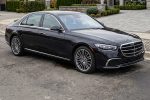
If you drive a recent-model Mercedes-Benz S-Class, Maybach, or AMG sedan, take note: Mercedes-Benz USA (MBUSA) has broadened an earlier safety campaign regarding potential front brake hose failure. Filed under NHTSA Campaign Number 26V-638, this action covers 30,064 vehicles across multiple high-end model lines.

What Is the Defect?

According to Mercedes-Benz AG (MBAG), the front axle brake hoses on affected vehicles may suffer from accumulated material fatigue. Over time, increased thermal and mechanical stresses sustained during regular driving can cause the brake hoses to rupture and leak fluid.

The Risk

Vehicles use a dual-circuit system. If fluid escapes from a damaged front hose, it leads to a loss of hydraulic pressure in one of the circuits. While the backup circuit ensures the car can still stop, overall stopping performance will be significantly reduced, increasing stopping distances and raising the risk of a crash.

Affected Vehicles

This expanded action affects 2022–2025 model year vehicles in the flagship S-Class (223 platform) lineup:

  • 2022–2025 Mercedes-Benz S 500 4MATIC
  • 2022–2025 Mercedes-Benz S 580 4MATIC
  • 2023–2025 Mercedes-Benz S 580 e 4MATIC
  • 2022–2025 Mercedes-Maybach S 580 4MATIC
  • 2022–2025 Mercedes-Maybach S 680 4MATIC
  • 2024–2025 Mercedes-AMG S 63 E Performance

How Did the Investigation Unfold?

This update builds upon NHTSA Campaign 25V-116, originally filed in February 2025.

  • The Initial Scope: MBAG initially attributed the brake hose failures to specific production windows and hot, humid regions where early cases were clustered.
  • New Field Data: Between March and August 2025, MBAG received additional field reports from outside the U.S. involving vehicles operated in different climates and built outside the original production time frame.
  • Engineering Review: MBAG launched a dedicated Field Engineering Activity in March 2026 to collect and analyze field components. Laboratory and durability testing completed in July 2026 confirmed that the risk applied to all vehicles produced up to the implementation of a redesigned brake hose in series production.
  • Current Status: On September 25, 2026, MBAG officially decided to broaden the affected population. While three U.S. reports were identified between April and August 2026, there have been no reports of crashes, injuries, or property damage related to this condition.

Warning Signs to Watch For

Due to the nature of material fatigue, there are no advance warning signs before a leak develops.

However, if fluid loss occurs while driving:

  1. A red brake fluid warning message will display in the instrument cluster.
  2. You may notice increased brake pedal travel or reduced stopping power.

Ford Motor Company has announced a safety defect affecting several 2025 Ford and Lincoln models due to a potential braking issue. Certain vehicles may experience a loss of power brake assist, which could extend stopping distances and increase the risk of a crash—particularly when Advanced Driver Assistance System (ADAS) features are in use.

Which Ford And Lincoln Vehicles Are Affected?

The recall involves specific 2025 models, including:

  • Ford F-150
  • Ford Expedition
  • Ford Bronco
  • Ford Ranger
  • Lincoln Navigator

Ford’s investigation found that the Electronic Brake Booster (EBB) module may malfunction while driving or when ADAS features are active.

What’s the Problem?

The issue was first detected on May 14, 2025, when the Expedition/Navigator Rapid Response Team identified a Ford Management Lease Vehicle with a loss of brake boost. The malfunction triggered a Diagnostic Trouble Code (DTC), prompting Ford to review connected vehicle data, driver reports, and incident logs.

Customers reported a sudden loss of brake boost, along with extended brake pedal travel and longer stopping distances. While Ford confirmed that affected vehicles still meet Federal Motor Vehicle Safety Standards (FMVSS 135, 105, and 126), the unexpected nature of the issue poses a safety risk.

Incident Reports

  • Between March 13 and June 26, 2025, Ford received 37 warranty claims related to this problem.
  • As of July 14, 2025, there has been one alleged low-speed crash potentially linked to the defect.
  • No injuries or fires have been reported.

The Recall Process

On July 18, 2025, Ford’s Field Review Committee approved a field action.

  • The fix involves an Electronic Brake Booster software update, which can be delivered over-the-air (OTA) or performed at a dealership.
  • Owner notification letters are expected to be mailed on August 25, 2025.
  • Ford recall number: 25S77
  • NHTSA campaign number: 25V-488

What Owners Should Do If Their Ford Or Lincoln Is Affected

If you own one of the affected vehicles:

  1. Schedule a dealer visit or wait for the OTA update if applicable.
  2. Monitor your braking performance, especially when using ADAS features such as adaptive cruise control or automatic emergency braking. If you experience unusual brake feel or extended stopping distances, seek service immediately.

Safety Reminder

Even with this issue, Ford states the braking systems remain functional, but stopping distances may be longer without power brake assist. Extra caution is advised until the repair is complete.

Nissan has determined that certain 2023 model year Nissan Leaf EVs may have a damaged right hand brake tube that could result in a brake fluid leak.

Nissan first became aware of the potential problem in January 2023 when a Nissan technician noticed a 2023 Nissan Leaf EV being assembled with a damaged right hand brake tube assembly. Nissan collected the affected parts and began an investigation. The investigation included a parts audit of 975 brake assemblies which revealed twenty-five (25) damaged right hand brake tubes at the actuator connection bend. Nissan also conducted a yard audit of 395 vehicles and found five (5) with a scratched or damaged right hand brake tube. These parts were quarantined and the vehicles were put on a quality hold.

According to the defect report, an investigation with the supplier determined that the incorrect tooling was used to align the brake tube into the pipe bending jig. Because the brake tube was misaligned, the tooling clamped the pipe in the incorrect position and caused scratching, and in some cases deformation of the tube, at the actuator bend.

Nissan performed corrosion and stress tests on two (2) of the worst case condition parts to evaluate the effect of the damaged brake tube on brake performance over time. Nissan concluded that the brake performance could be degraded and could lead to extended stopping distances possibly without prior warning. Nissan decided to conduct a Voluntary Safety Recall to recall all potentially affected LEAF vehicles to inspect the right-hand brake tube and replace any damaged brake tube assemblies.

Owners receiving notices will be asked to return to their dealers to have the right-hand brake tube inspected for damage. If damage is found, the affected brake tube will be replaced. Nissan’s number for this recall is PC976 and the NHTSA campaign number is 23V-362.